Raw lamb bones, such as necks and ribs, are widely fed by raw feeders. Cooked lamb bones should never be fed, including leftovers from a roast or chops. Lamb shanks and leg bones are much denser, so many raw feeders leave them out.
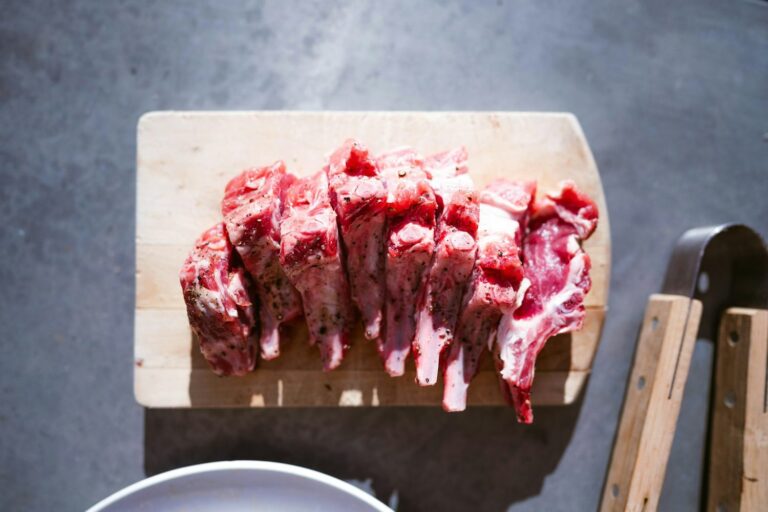
Lamb is everywhere in New Zealand, so it’s no surprise this bone question comes up so often. The answer depends almost entirely on whether the bone is raw or cooked, and which part of the lamb it comes from.
Raw lamb bones raw feeders use
- Lamb necks: meaty and fairly soft, and widely fed as a raw lamb bone.
- Lamb ribs: thinner bones with meat between them.
- Lamb flaps (the brisket): soft bone with a lot of fat. Most raw feeders give these now and then rather than often, because they’re so rich.
Choose a piece your dog has to chew rather than one they could swallow whole, which is a choking risk.
Lamb bones at a glance
| Lamb bone | What it’s like | How raw feeders use it |
|---|---|---|
| Raw necks | Meaty, fairly soft bone | A regular bone, a few times a week |
| Raw ribs | Thinner bones with meat between them | A regular bone; pick a piece your dog has to chew |
| Raw flaps (brisket) | Soft bone with a lot of fat | Now and then, as an occasional extra |
| Raw shanks and leg bones | Dense, weight-bearing bones | Many raw feeders leave them out |
| Any cooked lamb bone | Hard and brittle after cooking | Never |
Cooked lamb bones: never
Cooking makes bone hard and brittle, and it can splinter into sharp pieces; vets warn that cooked bones can damage the mouth, throat or gut. That’s true of the leg bone from a roast dinner, chop bones, and any lamb bone that’s been cooked, smoked or boiled. Bin them where the dog can’t reach.
After a roast, put the bones straight into a lidded bin, and ask visitors not to slip the dog a bone from their plate.
Shanks and leg bones
Raw lamb shanks and leg bones are weight-bearing bones. They’re much denser than necks or ribs, so many raw feeders leave them out. Our guide to which raw bones dogs can eat covers bones from other animals too.
Match the bone to the diet
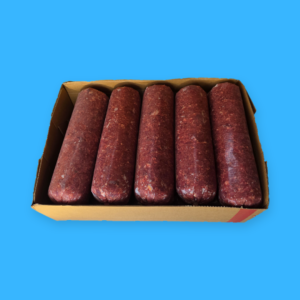
A good rule of thumb is to feed bones from the same animal as the rest of your dog’s food. If your dog eats lamb, raw lamb necks from the butcher pair naturally with our Lamb & Heart Rolls, which are lamb and lamb heart in 1.8 kg rolls.
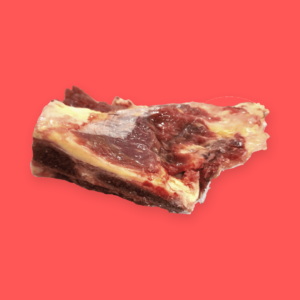
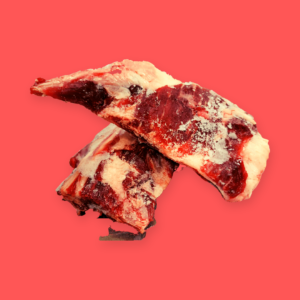
Our own bones are beef, veal and goat, in 10 kg cartons:
- Beef Brisket Bones and Beef Neck Bones for dogs on beef
- Veal Brisket Bones and Veal Neck Bones
- Goat Bones (when we have them) for dogs that stay off beef
Lamb & Heart Rolls have no beef, chicken or fish in them, so for a dog that stays off beef, Goat Bones keep the whole week beef-free, bones included.
How much bone a week
Raw bone is about 10% of a raw diet on the 80/10/10 rule of thumb, and our feed calculator plans about 10% of the food as raw bones too. For a 20 kg dog eating 500 g a day, that’s about 350 g of bone a week. Our guide to which raw bones dogs can eat has the amounts for every size.
Most dogs get that as a raw meaty bone a few times a week rather than a little every day. Weigh a neck or a rack of ribs on the kitchen scales once, and you’ll know how many pieces make up your dog’s week. On a bone day, give a little less of the usual food so the day’s total stays about the same.
Buying and storing lamb bones
Butchers sell raw lamb necks and flaps. Bag them in pieces of one or two when you get home, and freeze them flat so they’re easy to grab.
Our bone cartons come chilled, with the bones packed in together. Most people let the box soften a little, pull the bones apart and bag them up before they go in the freezer. The carton is 36 × 27 × 18 cm, about 17.5 litres of freezer space.
Either way, thaw a bone or two overnight in the fridge, in a covered container on the bottom shelf, and use it within two to three days.
A lamb week for a 20 kg dog
Here’s how a lamb-based week fits together, at 2.5% of body weight, the figure our calculator uses for a moderately active adult:
- Move one 1.8 kg roll of Lamb & Heart from the freezer to the fridge, in a sealed container.
- Once it’s thawed, scoop out about 450 g a day, split into two meals.
- A roll lasts this dog about four days, so keep two to three days’ worth in the fridge and put the rest back in the freezer in a tub. Raw meat thawed in the fridge can be refrozen.
- On some days, give a raw lamb neck or ribs, and a little less of the roll that day.
- Add some organ such as liver through the week.
Lamb & Heart Rolls come ten to an 18 kg carton, like all our raw dog rolls, so check your freezer space before you order. Delivery is $5 an order, whatever it weighs.
Feeding any raw bone
- Supervise, and take the bone away once it’s small enough to swallow.
- Feed outside or on a surface that’s easy to wipe down.
- Give each dog their own space at bone time.
- Bones are about 10% of a raw diet, which for most dogs means a raw meaty bone a few times a week.
If lamb bones are new to your dog, start with one and see how they go before making it a regular part of the week.
Lamb bone questions
Can my dog have the bone from my lamb chops?
No. Chop bones are cooked, and cooked bones can splinter. Raw lamb ribs or necks are the safer swap.
Are lamb bones too fatty?
Necks and ribs are fine for most dogs. Lamb flaps are the fatty one, so keep them as an occasional extra.
Can I give my dog a raw lamb shank?
Shanks are dense, weight-bearing bones, so many raw feeders leave them out and use necks or ribs instead. If your dog is a keen chewer, our guide to which raw bones dogs can eat covers the other raw bones raw feeders use.
Do Lamb & Heart Rolls need a bone with them?
Yes. The rolls are lamb and lamb heart, so add a raw bone a few times a week, and some organ such as liver. Our guide to liver and organ meat covers how much.
Where do I get raw lamb bones?
Butchers sell raw lamb necks, ribs and flaps. Ask for them raw and uncooked, and freeze them in small bags when you get home.
Can cats have lamb?
Lamb & Heart Rolls are one of the products marked “For Dogs & Cats”. Our guide to can cats eat raw meat covers amounts for cats.
More guides
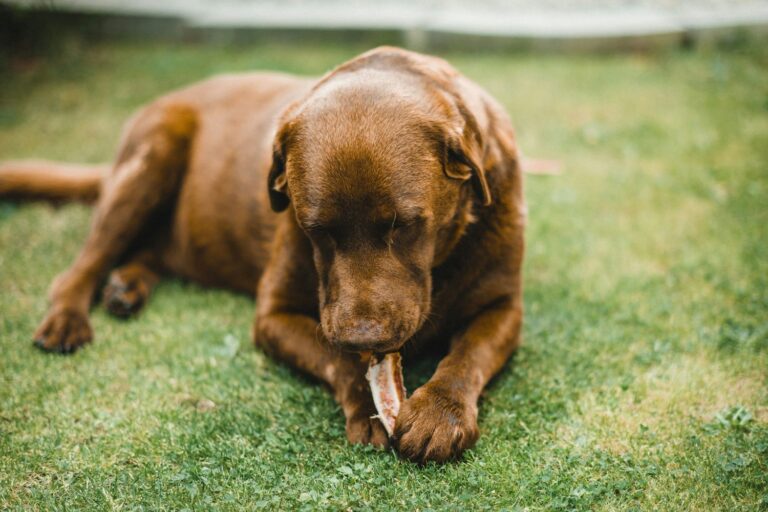
What raw bones can dogs eat?
Raw meaty bones, the ones to skip, and how to pick a bone that matches what your dog already eats.

Can dogs eat chicken necks?
Raw chicken necks as a first bone: how to feed them, hygiene, and one piece of research worth knowing.
Liver and organ meat for dogs: how much to feed
What counts as organ, why liver stays at about 5%, and how to add it to a raw diet.