Dogs can eat raw meaty bones, such as beef and veal brisket and neck bones, or goat bones. Never feed cooked bones of any kind, and skip the heavy weight-bearing leg bones from large animals.
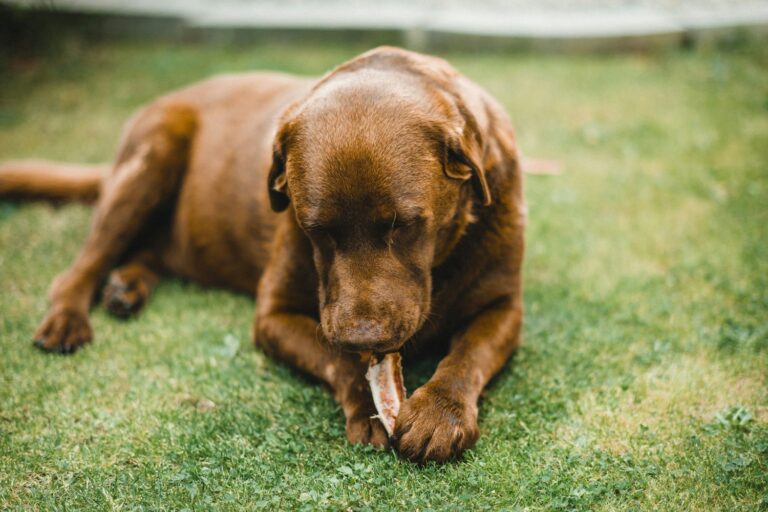
Raw bones are the “10% bone” in the 80/10/10 guide that many raw feeders follow. Choosing one comes down to two things: keeping it raw, and matching it to the protein your dog already eats.
Raw, never cooked
Cooking changes a bone. It goes hard and brittle and can splinter into sharp pieces. Raw bones are less brittle, which is why raw feeders use them and why you should never give your dog the leftover bones from a roast. That goes for bones from every animal, beef, lamb, chicken and pork included.
Bones to feed
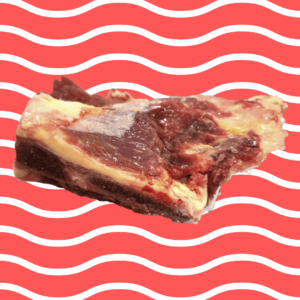
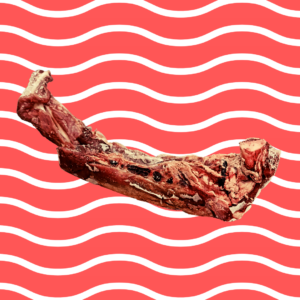
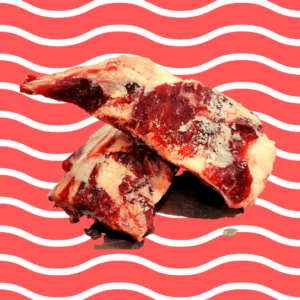
Raw feeders mostly use raw meaty bones, meaning bones that still carry meat and cartilage. Brisket bones (the soft bones and cartilage from the chest), neck bones, and chicken necks and frames are the usual ones.
The bones we sell are all raw meaty bones from New Zealand animals: Beef Brisket Bones, Beef Neck Bones, Veal Brisket Bones, Veal Neck Bones and Goat Bones.
Bones to avoid
- Any cooked bone, from any animal.
- Weight-bearing bones from large animals, like beef leg or marrow bones. They’re very dense and hard, so most raw feeders leave them out.
- Bones small enough to swallow whole. A bone your dog can gulp down in one go is a choking risk.
Match the bone to your dog’s diet
The simplest way to choose is to feed bones from the same animal as the rest of your dog’s food. It keeps the diet consistent, which matters most for dogs that can’t have certain proteins.
| If your dog eats | Pair it with |
|---|---|
| Beef Mince, Active Dog Mix, Breeders Mix or Puppy Mix | Beef Brisket Bones or Beef Neck Bones |
| Veal Mince or Fussy Mix | Veal Brisket Bones or Veal Neck Bones (veal is young beef, so these sit in the beef family) |
| Goat Mince or Wild Mix, or no beef at all | Goat Bones |
| Chicken Mince | It already has bone minced through it, so extra bones are optional |
How often to feed bones
Bone makes up about 10% of a raw diet under the 80/10/10 guide. For most dogs that works out to a raw meaty bone a few times a week, alongside their usual muscle meat and organ. If your dog’s stools get very hard and crumbly, that’s usually a sign of too much bone, so cut back a little.
Our raw dog food calculator plans about 10% of the food as bones and works out how much to order.
Splitting a frozen carton
Once they’re in your freezer, the bones in a carton freeze together into one big block. We keep an old chisel for this. We use it to break the block into portions, then put them straight back in the box. One customer emailed to say she’d used a hammer instead and had a great time doing it.
If your bones arrive chilled, that’s the easiest time to bag them into portions before they go in the freezer. Thaw portions in the fridge, not on the bench.
Feeding bones safely
- Always supervise your dog with a bone, and take it away once it’s small enough to swallow whole.
- Feed bones outside or on a surface that’s easy to clean.
- If you have more than one dog, give them space so nobody tries to gulp a bone to protect it.
Quick answers
How are your bones packed?
In 10 kg cartons that measure 35 × 25 × 15 cm, so check your freezer space before you order. They arrive chilled, ready to go straight in the freezer. See the full raw dog bones range.
How long does a carton last?
A 20 kg dog eating about 50 g of bone a day gets through a 10 kg carton in around six months.
More guides
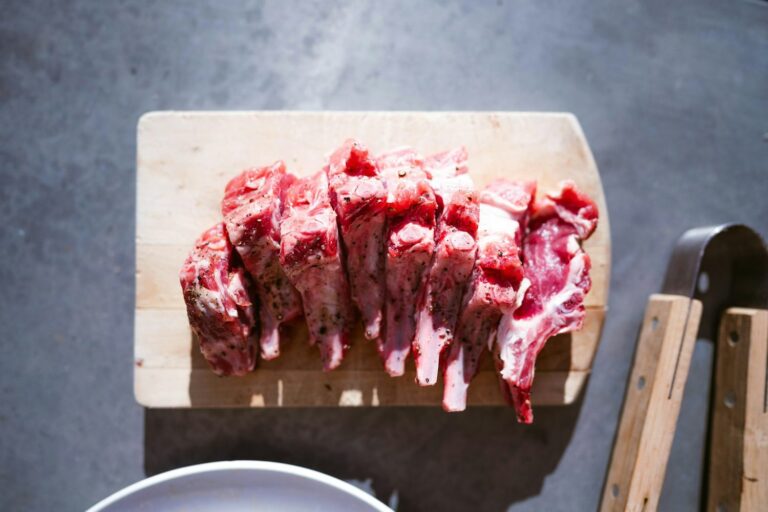
Can dogs eat lamb bones?
Which raw lamb bones raw feeders use, why cooked lamb bones are out, and what to do about shanks.
Read the guide →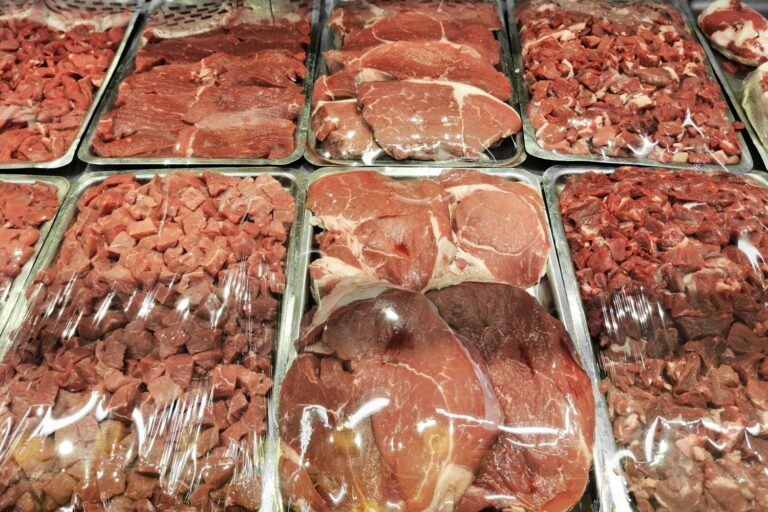
Raw pet mince vs supermarket mince
What supermarket mince is missing, what it costs per day, and how bulk pet mince compares.
Read the guide →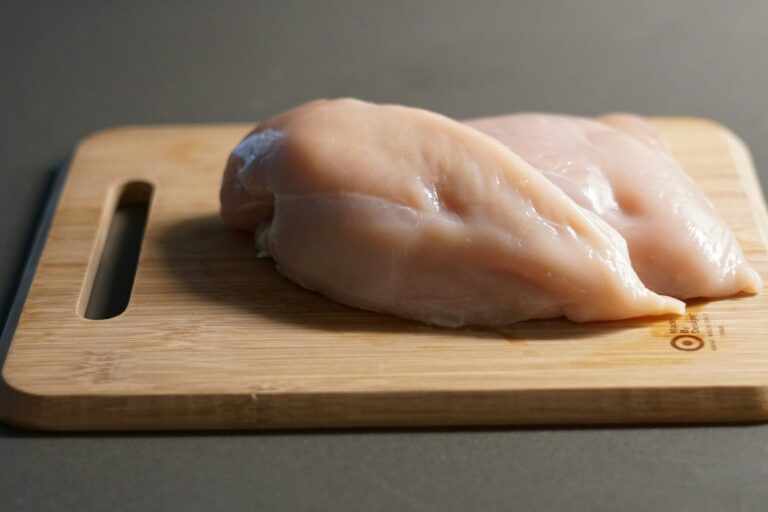
Can dogs eat raw chicken?
Raw chicken is one of the most common proteins in raw feeding. How to handle it safely, and why cooked bones never go in the bowl.
Read the guide →