Yes, most dogs can eat raw eggs as an extra a few times a week. Feed the whole egg rather than just the whites, count it as part of the daily amount, and wash your hands after cracking them, as you would when cooking.
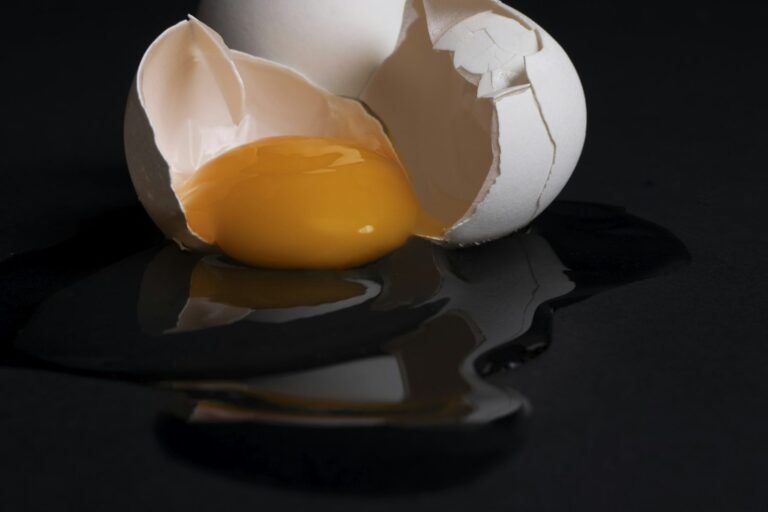
Eggs are a favourite extra with raw feeders. They keep well in the fridge, and most dogs are keen on them. Here’s how many to give, how to serve them raw, and how they fit into the day’s food.
Whole eggs, not just the whites
Raw egg white contains a protein called avidin, which binds to biotin, one of the B vitamins, and stops the body absorbing it. The yolk is a good source of biotin, and the occasional whole raw egg isn’t considered a problem. The concern is with feeding lots of raw whites on their own, day after day, for a long time, so add the whole egg.
That makes the routine easy: crack the egg, tip in the white and the yolk together, and mix it through. If you’ve separated eggs for baking, the spare yolks can go in the dog’s bowl, and the spare whites are better cooked or used for something else.
Are raw eggs good for dogs?
An egg is a small, whole food: protein and fat, plus vitamins and minerals such as vitamin A, B12, riboflavin, folate, iron and selenium. Raw feeders like them because they’re cheap, easy to keep on hand and a change from meat, and because most dogs think an egg on top is a treat.
Eggs are an extra rather than the base of the bowl. The base is still meat, raw bone and organ, with an egg added a few times a week for variety.
How many eggs?
Treat eggs as an extra rather than a main meal. For a medium-sized dog, one egg a few times a week is a common amount. Smaller dogs need less and bigger dogs can have a bit more. If you’d like to feed eggs every day, use smaller amounts.
An egg weighs about 45 to 55 g without the shell. Take that off the rest of the meal on egg days so the total stays about the same. Our guide to how much raw food to feed has daily amounts by weight.
It helps to see an egg next to the day’s food. Using the 2.5% of body weight a day that our feed calculator uses for a moderately active adult dog:
| Dog’s weight | Raw food a day | One egg (about 55 g) is | A common amount per serve |
|---|---|---|---|
| 5 kg | 125 g | nearly half the day’s food | a quarter to half an egg |
| 10 kg | 250 g | about a fifth | half to one egg |
| 20 kg | 500 g | about a tenth | one egg |
| 30 kg | 750 g | about a fourteenth | one to one and a half eggs |
| 40 kg | 1 kg | about a twentieth | one and a half to two eggs |
Once or twice a week is a common starting point, and plenty of raw feeders go up to a few times a week once they know their dog does well on eggs.
For a small dog, whisk an egg and give half, then keep the other half covered in the fridge for the next day. A size 6 or size 7 egg from the supermarket is fine; the table uses about 55 g, about the inside of a size 7 egg.
What about the shell?
Some raw feeders crush the shell and add it, as a source of calcium. If your dog already gets raw meaty bones or a mince with bone in it, they’re getting calcium from the bone, so the shell is optional. If you do use it, crush it finely.
An easy way: rinse the shells, let them dry on the bench, then crush them in a mortar and pestle or blitz them in an old coffee grinder until they’re a fine powder. A pinch over the meal is plenty. Big sharp pieces aren’t worth it.
Eggs and hygiene
Raw eggs, like raw meat, can carry bacteria such as Salmonella, so the same kitchen habits apply. Keep eggs in the fridge and use them before the best-before date. Skip any with cracked or dirty shells. Wash your hands after cracking them, as New Zealand Food Safety advises for eggs, and wash the bowl after the meal.
It’s the same routine you already use for raw meat, so it fits in with the rest of raw feeding. Our guide to raw feeding hygiene covers the whole routine.
How to serve them
- Crack one straight over the usual meal and mix it through.
- Whisk it with a little mince, which suits dogs who pick the egg out.
- For a dog new to raw, wait until they’re settled on their main protein before adding eggs, so you’re changing one thing at a time.
Cracking a raw egg over dog food is the way most people start. If your dog eats around the egg, whisk it first so it coats the mince, or mix it into a smaller first serving and add the rest of the meal once that’s gone. A spoonful of green tripe stirred through helps with a dog that’s unsure.
Cooked eggs are fine for dogs too, as long as they’re plain, with no butter, oil or salt. Raw feeders tend to stick with raw to keep the diet uncooked.
Some dogs can’t have eggs. If your dog has a known food allergy or a medical condition, check with your vet first.
A week with eggs
Here’s how eggs might fit into a week for a 20 kg dog eating about 500 g of raw food a day:
- Most days: their usual mince or blend, about 450 g, plus a raw bone a few times a week.
- Two or three days a week: one egg cracked over the meal, with about 55 g less mince that day.
- Once or twice a week: a different protein or a spoonful of tripe for variety.
Introduce eggs one at a time like any new food. Start with half an egg, and if your dog does well on it, carry on with a whole one.
Other extras raw feeders add
Green tripe is the other popular topper, and it tends to win over fussy eaters. Rotating proteins through the week adds variety too. Our blends, such as Active Dog Mix and Wild Mix, combine several proteins in one box if you’d rather not mix your own.
Common questions
Can dogs eat raw egg yolk?
Yes. The yolk is the part with the biotin in it, so a raw yolk on its own is fine. What raw feeders avoid is lots of whites on their own, day after day.
Can dogs eat raw eggs every day?
Some owners do, with a smaller amount each day so the week’s total stays modest. Keep the rest of the day’s food a little lighter to match.
Can dogs eat eggshells?
Finely crushed, yes, as a pinch of calcium. If your dog already eats raw bones or a mince with bone through it, you can leave the shell out.
Can I crack a raw egg over my dog’s food?
Yes, that’s how most raw feeders give them. Mix it through the meal, and take the egg’s weight off the day’s food.
Can puppies have raw eggs?
Wait until your puppy is settled on their main food, then add a little egg as an extra, the same as for an adult dog. Our guide to how much raw food to feed a puppy has daily amounts by age.
Are eggs a common allergen for dogs?
Eggs turn up much less often than beef, dairy or chicken in vet studies of food allergies in dogs. Our guide to beef allergy in dogs has the figures, and our guide to raw food for dogs with allergies covers choosing food by protein.
Do eggs need to be fresh?
Use them before the best-before date, keep them in the fridge, and skip any that are cracked, dirty or smell off.
More guides

How much raw food to feed a puppy, and where to start
Daily amounts by age, how many meals, and a simple way to start a puppy on raw.
Beef allergy in dogs: what causes it and the signs
What a beef allergy is, the signs owners notice, how vets confirm it with an elimination diet, and where beef hides in raw food.
Grain free dog food: is a raw diet grain free?
Why raw food is grain free by nature, what grain free means on a label, and switching from grain free kibble.