A typical adult Labrador of 30 kg eats about 600 to 900 g of raw food a day, depending on how active they are. For a moderately active Lab that’s around 750 g, or roughly two 10 kg cartons of mince a month plus some raw bones.
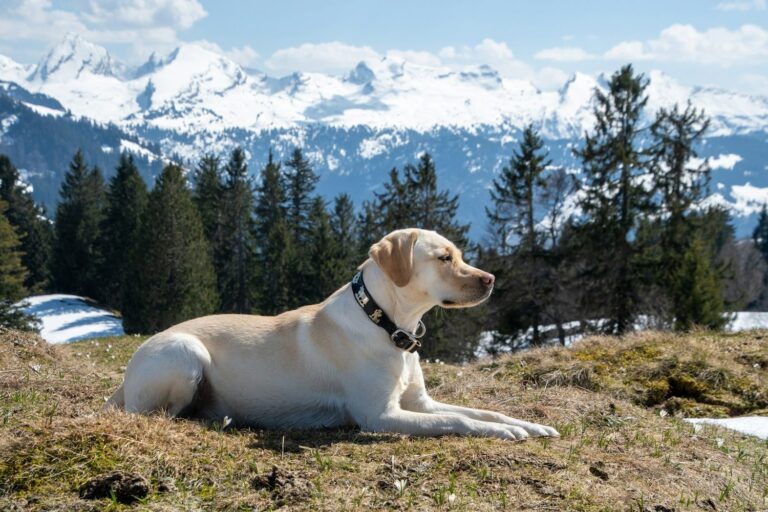
Labradors take to raw food the way they take to most food: enthusiastically. The main job for a Lab owner is getting the amount right, because a Lab will rarely tell you they’ve had enough. This guide is about exactly that: how much, how to tell if it’s right, and how to keep a hungry Lab happy on it.
How much to feed a Labrador
Most adult Labradors weigh somewhere between about 25 and 36 kg, with males at the heavier end. Use your dog’s ideal weight, not their current weight, if they need to lose a kilo or two.
| Lab’s weight | Quieter (2%) | Moderate (2.5%) | Working or very active (3%) |
|---|---|---|---|
| 25 kg | 500 g | 625 g | 750 g |
| 30 kg | 600 g | 750 g | 900 g |
| 35 kg | 700 g | 875 g | 1,050 g |
A family Lab who gets a walk or two a day usually sits in the moderate column. A Lab that works in the field or runs with you most days may need the higher amount. Many owners split it into two meals.
Here’s how the moderate amount splits into the calculator’s 90% mince or blend and 10% bone, and two meals a day:
| Lab’s weight | A day (2.5%) | Mince or blend | Bone, averaged over the week | Each of two meals |
|---|---|---|---|---|
| 25 kg | 625 g | about 560 g | about 60 g | about 280 g of mince |
| 30 kg | 750 g | about 675 g | about 75 g | about 340 g of mince |
| 35 kg | 875 g | about 790 g | about 90 g | about 395 g of mince |
The bone part usually comes as a raw meaty bone a few times a week rather than a little every day.
Why Labs always seem hungry
It isn’t just you. Researchers at the University of Cambridge found a gene change carried by around one in four Labradors that affects how the brain senses hunger and fullness, and dogs carrying it tend to be more motivated by food. So a Lab looking at an empty bowl as if it’s been a week isn’t a sign they need more. Go by their shape, not their face.
The upside is that a food-driven Lab is easy to train and rarely fussy, which makes switching to raw simple.
Keeping a Lab in shape
Labs are famous for their appetite, and that makes it easy to overfeed by accident. A few habits help:
- Weigh each meal for the first few weeks rather than guessing.
- Count training treats and scraps as part of the daily amount.
- Check their shape every couple of weeks. You should be able to feel their ribs easily under a thin layer of fat.
- If they’re gaining, trim about 10% off the daily amount and check again in two weeks.
Our guide to the dog body condition score shows how to check ribs, waist and tummy tuck, with a worked example of cutting back. As a quick picture: for a 30 kg Lab on 750 g a day, a 10% trim is about 75 g less a day.
An example week for a 30 kg Lab
For a moderately active 30 kg family Lab at about 750 g a day:
- Morning: about 340 g of mince or blend.
- Evening: about 340 g of mince or blend, with a raw meaty bone instead of part of the meal on some evenings.
- Training treats: taken out of the day’s total, not added on top.
- Thawing: move about three blocks of about 500 g from the freezer to the fridge every other evening, enough for two days.
Labs that work, swim or hunt through the season often need more on those weeks and less in the quiet months. Move between the columns as the season changes, and let their shape be the guide.
Making meals last longer
A Lab can clear a bowl of raw mince in seconds. Slowing them down makes the meal feel bigger without adding a gram:
- Spread the meal over a lick mat or in a slow-feeder bowl.
- Stuff part of the meal into a rubber feeding toy and freeze it for a long-lasting chew.
- Use part of the day’s food for training, so they work for it.
- Give a raw meaty bone, matched to the diet, a few times a week as a long chew, and supervise.
What to feed
Labs aren’t fussy, so the choice is mostly about your dog’s activity and any proteins they need to avoid.
- For a working or very active Lab, Active Dog Mix is beef, horse, offal and green tripe, made with busy dogs in mind.
- For a family Lab, Chicken Mince mixed with Balance Mix, one part Balance Mix to two parts mince, adds bone and organ to the muscle meat in one step.
- For bones, match the bone to the food. Beef Brisket Bones go with Active Dog Mix, which is beef-based. Chicken Mince already has bone through it, so extra bones are optional.
How long a carton lasts
Our calculator plans about 90% of the food as mince or blend and 10% as raw bones. For a 30 kg Lab eating 750 g a day, that’s about 675 g of mince a day, so a 10 kg carton lasts roughly two weeks. A 10 kg carton of bones lasts around four months. Our raw dog food calculator works it out for your dog, and our raw versus kibble cost guide has the cost per day by weight.
For a 30 kg dog at 2.5%, feeding from our boxes comes to about $5.10 to $6.10 a day. Delivery is $5 an order whatever the weight, so two or three boxes at a time, or a subscription every two to four weeks, keeps the fee per box low.
Switching a Lab to raw
Your Lab may well eat raw happily from the first bowl, but it’s still worth switching over a week or two so their stomach can adjust. Our guide to switching to raw has a day-by-day plan.
Common questions
How much should I feed my Labrador?
Start at 2.5% of their ideal weight a day, about 750 g for a 30 kg Lab, and adjust by about 10% after a few weeks of checking their shape.
Can a Labrador puppy eat raw?
Yes. Puppies eat more for their size and the amount changes as they grow. Our guide to how much raw food to feed a puppy has amounts by age, and many breeders keep large-breed puppies lean as they grow.
My Lab begs all day. Should I feed more?
Not if their shape is right. Go by ribs and waist, and use part of the day’s food for training or a lick mat if they need something to do.
How do I weigh my Lab at home?
Weigh yourself on the bathroom scales, then weigh yourself holding your Lab, and take one from the other. Use the same scales each time, every couple of weeks.
Do Labs need a different raw food from other dogs?
No. The food is the same as for any adult dog. What matters with a Lab is the amount, so weigh meals and keep an eye on their shape.
Which raw food suits a Labrador?
Most Labs eat anything, so pick by activity: Active Dog Mix for a working Lab, or Chicken Mince with Balance Mix for a family dog, plus raw bones a few times a week.
One meal or two for a Lab?
Two meals suit most Labs and make the day feel less hungry between bowls. Pick a time and keep to it.
More guides
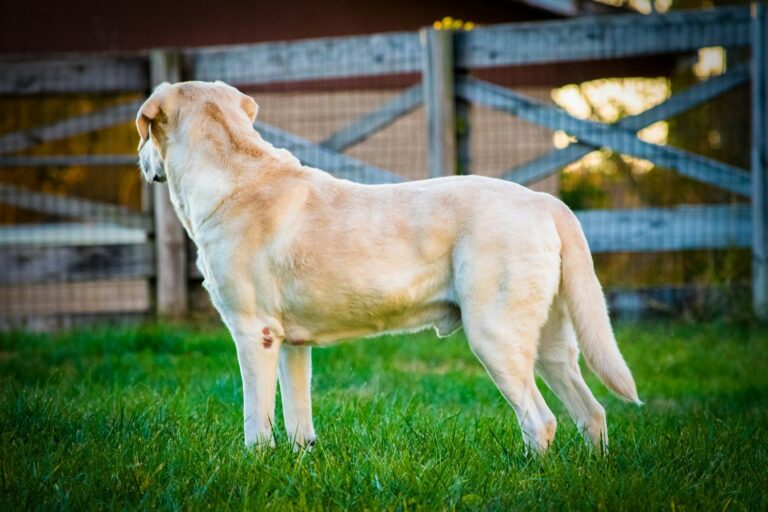
Dog body condition score: is my dog the right weight?
Check your dog's ribs, waist and tummy tuck on the 9-point scale, then adjust raw amounts, with a worked example for a 20 kg dog.
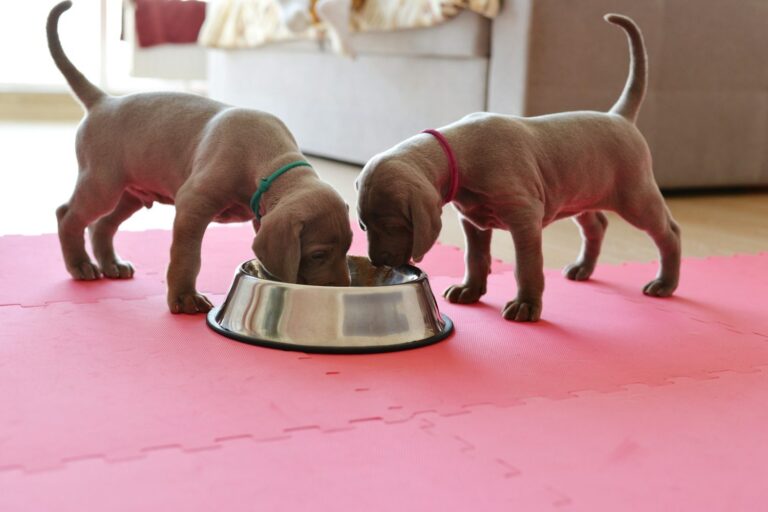
How much raw food to feed a puppy, and where to start
Daily amounts by age, how many meals, and a simple way to start a puppy on raw.
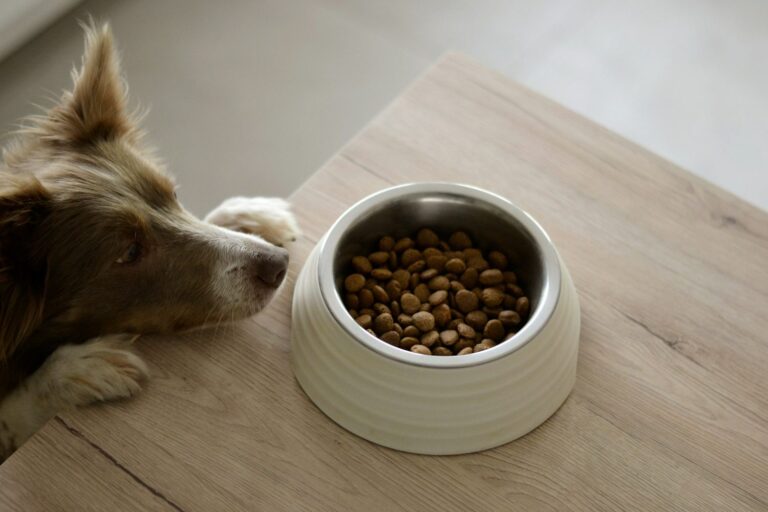
Raw dog food vs kibble in NZ: the cost per day
Cost per day for the same 20 kg dog, from budget kibble to small-pack raw, and how to keep raw feeding affordable.