A dog body condition score rates your dog’s shape on a scale of 1 to 9, where 4 or 5 is ideal: you can feel the ribs easily under a thin layer of fat, see a waist from above and see the tummy tuck up from the side. If your raw-fed dog scores a 6, trim the daily amount by about 10% and check again in two weeks. For a 7 or more, work the amount out from their ideal weight. If they’re under ideal, add about 10%.
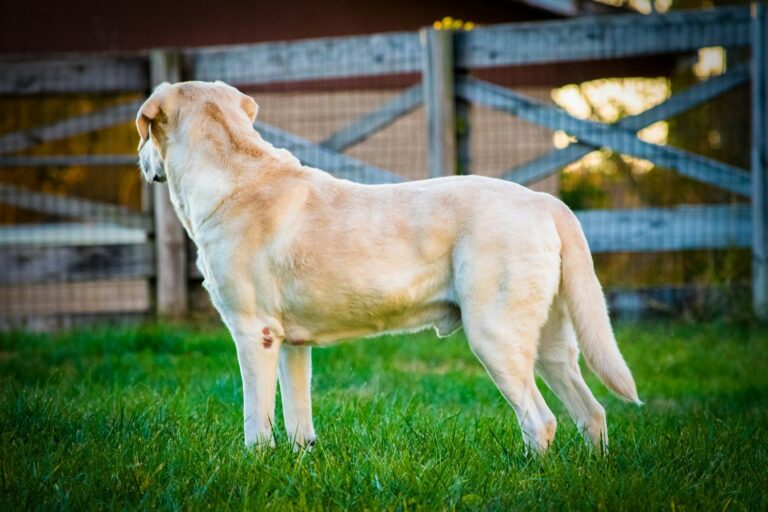
The dog body condition score is a quick hands-on check of your dog’s shape. It shows whether they’re carrying the right weight for their frame, and whether your raw feeding amounts need to go up or down.
The dog body condition score
Many vets use a 9-point scale, and the World Small Animal Veterinary Association (WSAVA) publishes a free body condition chart in its nutrition guidelines. Scores 1 to 3 are under ideal, 4 and 5 are ideal, and 6 to 9 are over ideal. Here’s what each one looks like, in the chart’s terms put simply:
| Score | Ribs | Waist and tummy | Roughly |
|---|---|---|---|
| 1 to 2 | Ribs, spine and hip bones easy to see | No fat to feel, muscle loss | Very thin |
| 3 | Ribs easy to feel and may show, no fat over them | Obvious waist and tummy tuck | Thin |
| 4 to 5 | Ribs easy to feel under a thin layer of fat | Waist visible from above, tummy tucked up from the side | Ideal |
| 6 | Ribs can be felt, with a bit too much fat | Waist there but not obvious | About 10% over |
| 7 | Hard to feel under a heavy fat cover | Waist barely there, fat over the lower back and base of the tail | About 20% over |
| 8 | Can’t be felt without pressing hard | No waist, no tummy tuck | About 30% over |
| 9 | Buried under heavy fat | Fat on the neck and legs, belly obviously swollen | About 40% over |
Descriptions from the WSAVA Body Condition Score chart for dogs. The “roughly” column is from the 2021 AAHA Nutrition and Weight Management Guidelines, which put each point above 5 at about 10% over ideal weight.
How to check your dog in a minute
- Ribs. Run your flat hands along your dog’s sides. You want to feel each rib easily under a thin layer of fat, without having to press. If you can see them from across the room, your dog is on the thin side. If you have to dig to find them, there’s too much cover.
- Waist. Stand over your dog and look down. Behind the ribs, the body should narrow into a waist before the hips.
- Tummy tuck. Look from the side. The line of the belly should rise from the chest up towards the back legs, not run straight or sag.
Fluffy and long-coated dogs hide their shape well, so go by feel more than sight with them. With a short coat, you can usually see the waist and tuck straight away.
Weighing your dog
Weighing every few weeks shows whether a change in amounts is working. Two ways to do it:
- At the vet clinic. Ask your clinic whether you can pop in and use their scales between visits. It’s handy for a big dog.
- The bathroom scale method. Weigh yourself and write it down. Pick your dog up, step back on the scale, and write that down. Take your weight away from the combined weight and you have your dog’s.
Use the same scale each time, at about the same time of day, so you’re comparing like with like. Home scales are fine for spotting a trend; if the number looks odd, check it on the clinic’s scale.
How often to check
When you first switch to raw, or any time you change the amount, check the score and weigh every two weeks. Once your dog is steady at an ideal score, once a month is plenty. Activity changes through the year, so a dog that’s busier in one season may need less in a quieter one, and a monthly check catches that early.
Adjusting raw amounts up or down
Most adult dogs eat about 2 to 3% of their body weight a day in raw food. Our feed calculator uses 2% for a quieter dog, 2.5% for a moderately active one and 3% for a very active or working dog, so each activity step is half a percent of body weight. Our guide to how much raw food to feed a dog has the full table.
There are two sizes of change:
- A nudge of about 10%. For a dog at 6, or a little under ideal, change the daily amount by about 10% and check again in two weeks.
- A step of half a percent of body weight. If a 10% nudge hasn’t moved things after a few weeks, move one activity step on the calculator, for example from 2.5% to 2%.
For a dog that needs to lose or gain more than a little, work out the amount from their ideal weight rather than their current weight. That way the amount doesn’t creep up as the weight does. Your vet can tell you what the ideal weight is for your dog.
Remember that everything counts. Raw meaty bones, treats, chews and scraps from the table all add to the day. For a compact, muscly breed, our guide to raw food for Staffies works through the amounts.
A worked example: a 20 kg dog
Say your dog weighs 20 kg and eats 500 g of raw food a day, which is 2.5% of her weight. You check her: the ribs are hard to feel, there’s barely a waist from above, and there’s some padding at the base of the tail. That’s a 7, or about 20% over ideal.
| Step | What to do | Daily amount |
|---|---|---|
| Now | 2.5% of 20 kg | 500 g |
| Ideal weight | 20 kg is about 20% over, so ideal is about 20 ÷ 1.2 | about 16.7 kg |
| New amount | 2.5% of her ideal weight | about 415 g |
| Two weeks on | Weigh and score again; if nothing has moved, drop to 2% of ideal weight | about 335 g |
| At her ideal score | Hold the amount, and check monthly | whatever keeps her steady |
With about 415 g a day instead of 500 g, a 10 kg box also lasts her a few days longer. The calculator does these sums for you: enter her ideal weight rather than her current weight, choose her activity level, and it gives the daily amount and how many boxes cover the weeks you choose.
For a dog that’s under ideal, it works the other way. A 20 kg dog at a 3 might go from 500 g to 550 g, then be checked again in two weeks.
Young dogs and older dogs
A puppy grows so fast that its daily amount is based on age and current weight, and it changes almost month by month. Our puppy feeding guide has the table. You can still use the rib, waist and tummy check on a puppy, and the AAHA guidelines advise keeping a giant-breed puppy lean while it grows.
Older dogs often need a little less. The calculator uses about 1.8 to 2.2% of body weight for dogs aged seven and over, depending on activity. Our guide to raw feeding older dogs covers the rest.
If you have a Labrador, our guide to raw food for Labradors has an example week for a 30 kg Lab.
If your dog’s weight changes and you haven’t changed what they eat, or they’re losing weight while eating well, see your vet. A vet can also set a target weight and a safe pace for getting there.
Common questions
Is my dog overweight?
If you can’t feel the ribs without pressing, there’s no waist from above, and the belly doesn’t tuck up from the side, your dog is probably over ideal. A score of 6 or more on the 9-point scale means it’s time to trim the daily amount.
How fast should my dog lose weight?
Slowly, in small steps with a check every two weeks. Your vet can suggest a pace that suits your dog.
Does the calculator use current or ideal weight?
Whatever you enter. For a dog that needs to lose or gain, enter the ideal weight.
Can a dog be the right weight but the wrong shape?
Yes. Two dogs of the same weight can look quite different depending on their frame and muscle. That’s why the hands-on score matters as much as the number on the scales.
Do bones count towards the daily amount?
Yes. Our calculator plans about 90% of the day as mince or a blend and 10% as raw bones, so the bones are part of the daily amount, not extra.
More guides
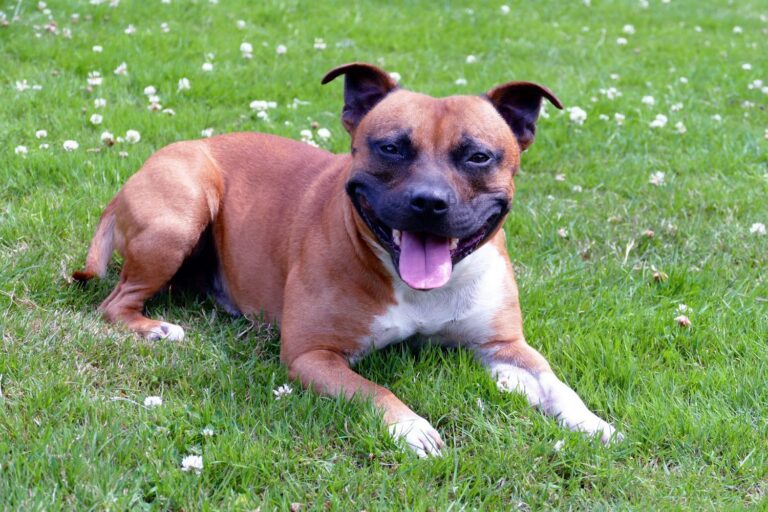
Raw food for Staffies: how much to feed
Daily amounts for a Staffordshire Bull Terrier, keeping a keen eater lean, and bones for a strong chewer.
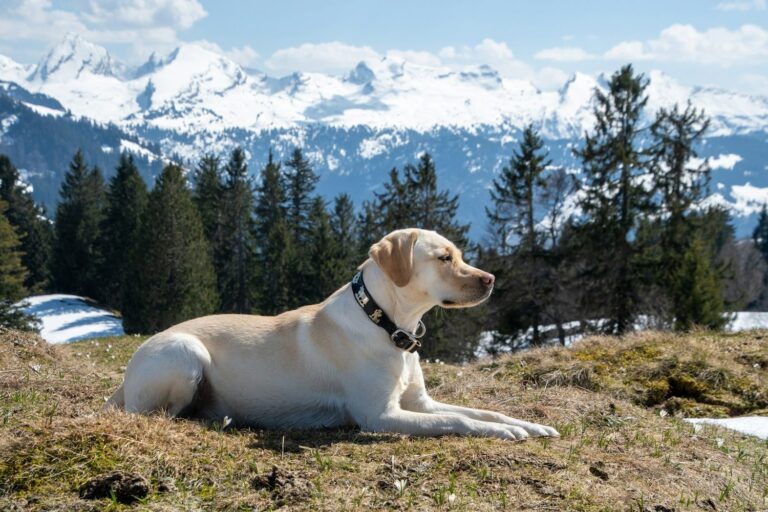
Raw food for Labradors: how much to feed
Daily amounts for a Lab by weight and activity, keeping them in shape, and how long a carton lasts.
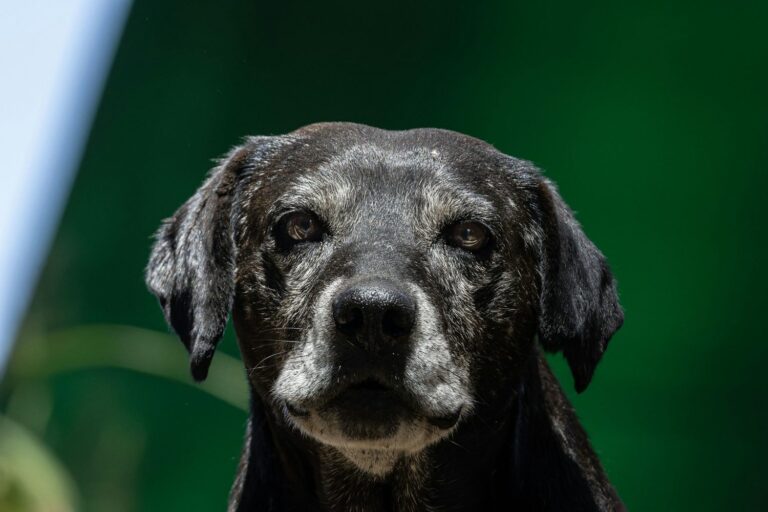
Raw food for older dogs
How much to feed a dog aged seven and over, foods that are easy to eat, and switching an older dog.